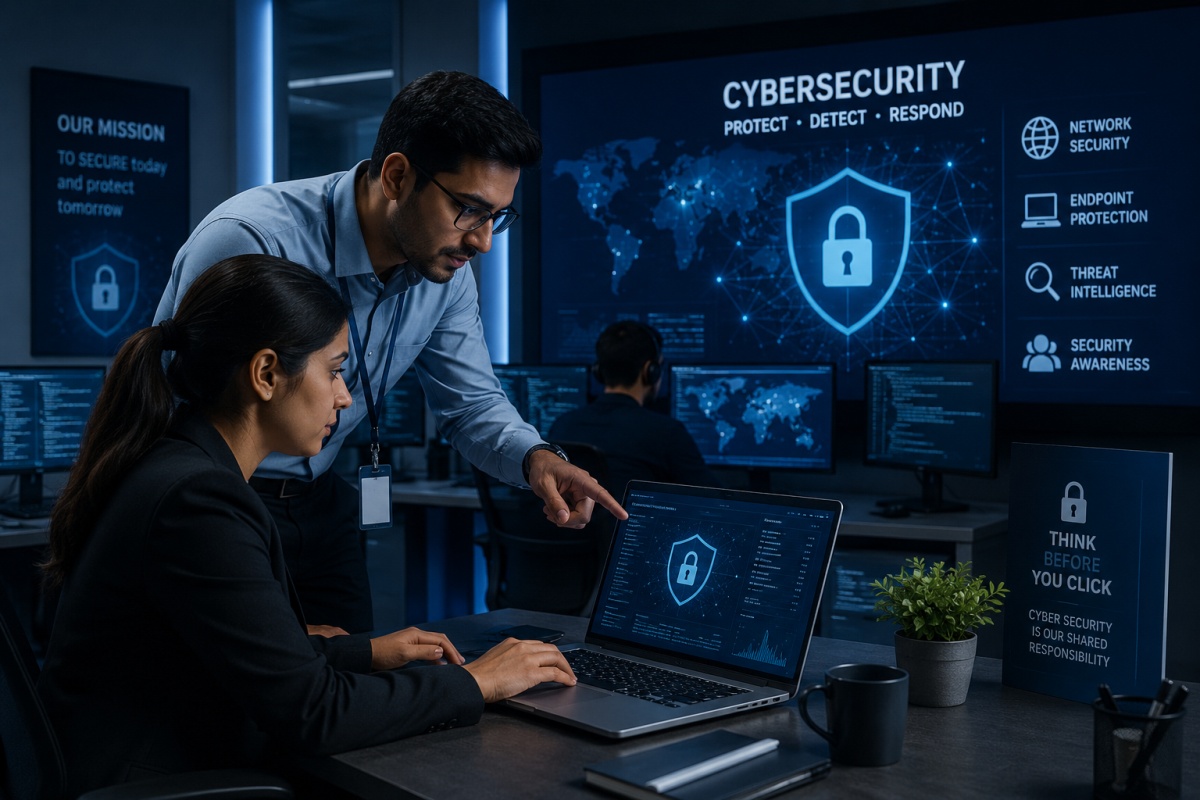
Today, almost every job uses some kind of digital tool. People use email, cloud storage, online meetings, payment apps, project tools, customer platforms, and company software every day. Because of this, cybersecurity is no longer only the IT team’s responsibility.
A small mistake from any employee can create a security problem. Someone may click a fake email link, use a weak password, share a file with the wrong person, or connect to an unsafe Wi-Fi network while working outside the office. This is why cybersecurity awareness has become important for every digital professional. Anyone who wants to build a stronger security foundation can start with CompTIA Security+ Certification Training to understand basic security risks and safe digital practices.
Contents
- 1 Cybersecurity Is Part of Daily Work
- 2 Password Mistakes Still Create Risk
- 3 Phishing Emails Are Getting More Realistic
- 4 Data Sharing Needs More Care
- 5 Remote Work Increases Security Challenges
- 6 Software Updates Should Not Be Ignored
- 7 Cybersecurity Awareness Helps Reduce Human Error
- 8 Every Department Handles Sensitive Information
- 9 Security Culture Starts With Small Habits
- 10 Why Security+ Knowledge Is Useful
- 11 Conclusion:
Cybersecurity Is Part of Daily Work
Most people do not think about cybersecurity while doing daily tasks. They open emails, download files, join meetings, and use company systems as part of normal work. But many security risks start from these simple actions.
For example, an employee may receive an email that looks like it came from the HR team. The email may ask them to click a link and update their password. If the employee does not notice the warning signs, the company account may get compromised.
Password Mistakes Still Create Risk
Weak passwords are still one of the common reasons accounts become unsafe. Many people use simple passwords because they are easy to remember. Some people also reuse the same password for office and personal accounts.
This can lead to issues. When one account is compromised, additional accounts may also be in jeopardy. Employing robust passwords and multi-factor authentication can effectively minimize this risk in an uncomplicated manner.
Phishing Emails Are Getting More Realistic
Phishing emails are not always full of spelling mistakes now. Some look very professional. They may use company names, familiar logos, payment details, or urgent messages to make people act quickly.
This is why awareness matters. A trained employee may pause before clicking a link, check the sender address, and ask the IT team if something looks suspicious. That one pause can prevent a bigger issue.
Data Sharing Needs More Care
Digital professionals share files every day. It may be a client document, employee record, project report, or financial sheet. Sharing makes work easier, but it also creates risk when done carelessly.
For example, if a file with customer data is shared with the wrong email address, it can become a serious issue. People should check access permissions, file links, and recipient details before sharing sensitive information.
Remote Work Increases Security Challenges
Many people now work from home, cafes, airports, or client locations. This gives flexibility, but it also changes the security situation. Home Wi-Fi, public networks, and personal devices may not always be safe.
A digital professional should know basic safe habits while working remotely. This includes avoiding public Wi-Fi for sensitive work, using company-approved tools, keeping devices locked, and not saving office files in personal accounts.
Software Updates Should Not Be Ignored
Many people delay software updates because they feel updates interrupt work. But updates often fix security gaps. Ignoring them for too long can leave the device open to risks.
For example, if a laptop is running old software, attackers may use known weaknesses to enter the system. Updating devices, apps, and browsers regularly is a simple but important security habit.
Cybersecurity Awareness Helps Reduce Human Error
Human error is one of the biggest reasons security incidents happen. This does not mean employees are careless. Many times, people simply do not know what to check or what to avoid.
Awareness helps people understand common risks in normal language. When employees know what phishing looks like, why passwords matter, and how data should be handled, they are less likely to make avoidable mistakes.
Every Department Handles Sensitive Information
Cybersecurity awareness is not only for technical teams. HR handles employee records. Finance handles payments and invoices. Sales teams handle customer information. Marketing teams use online tools and shared accounts.
Each department has some kind of sensitive information. If people do not understand basic security, that information can be exposed by mistake. This is why awareness should be part of every role.
Security Culture Starts With Small Habits
A strong security culture does not start with big rules. It starts with small daily habits. Locking the laptop, checking email links, using secure passwords, reporting suspicious messages, and sharing files carefully can make a big difference.
When these habits become normal, security becomes part of the workplace culture. People stop seeing it as extra work and start treating it as part of responsible digital behavior.
Why Security+ Knowledge Is Useful
CompTIA Security+ knowledge is useful because it gives a clear understanding of basic cybersecurity concepts. It covers threats, risk, access control, network security, incident response, and safe security practices.
This kind of knowledge helps not only future cybersecurity professionals but also people working in IT support, networking, cloud, system administration, and digital business roles. Professionals who want to compare cybersecurity learning options can visit SterlingNext cybersecurity courses for career-focused development paths.
Conclusion:
Cybersecurity awareness is becoming essential because digital work is now part of every profession. A small mistake can affect accounts, data, customers, and business operations.
Every digital professional should understand basic security habits. They do not need to become cybersecurity experts, but they should know how to protect accounts, handle data carefully, identify suspicious messages, and work safely online. Strong awareness helps protect both the individual and the organization.