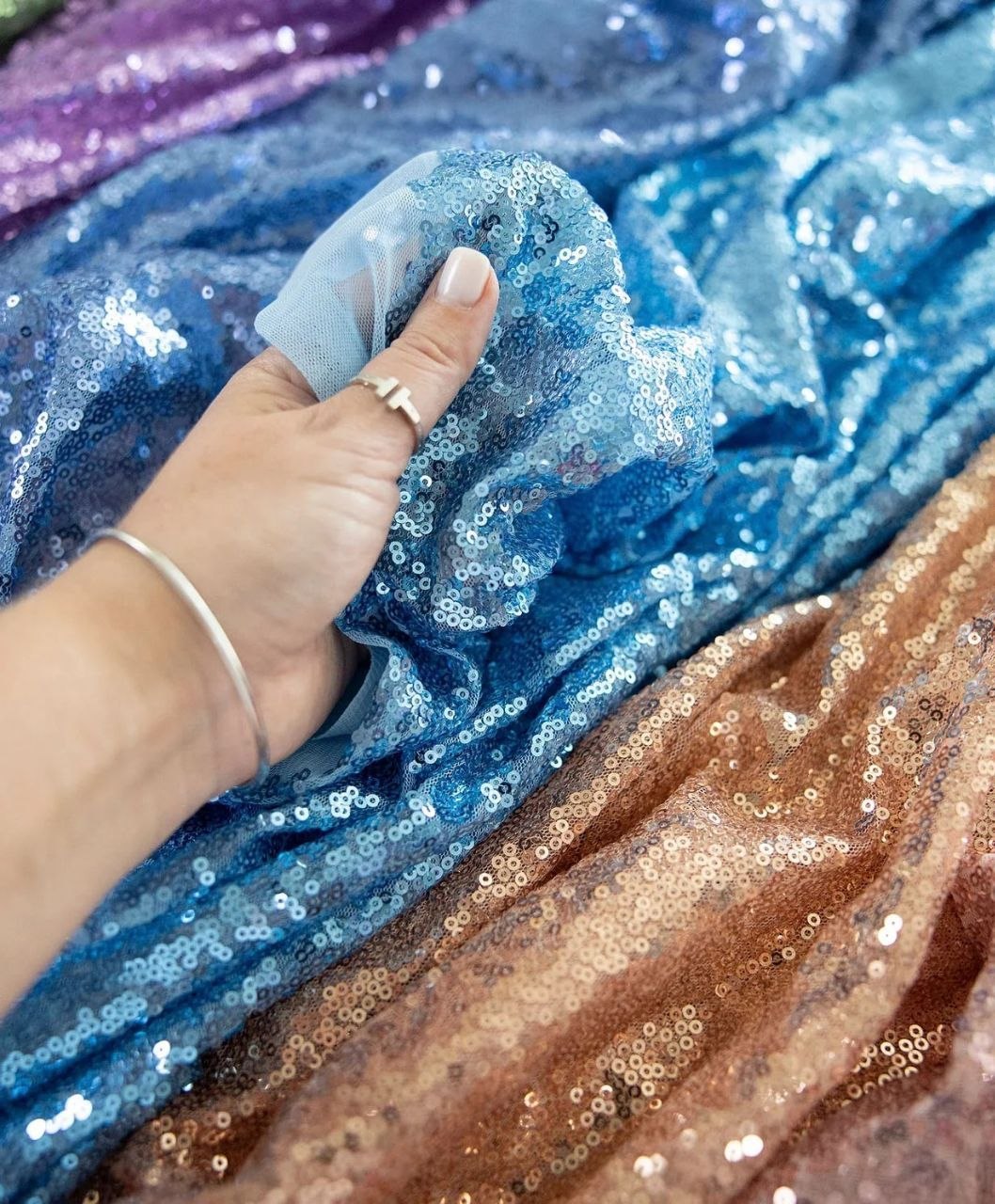
Sequin lace is exactly what it sounds like — lace with sequins sewn or embroidered on, combining delicate patternwork with a real shimmer. It’s a fairly modern combination as far as textiles go. The two crafts merged in the 19th century, when Parisian designers began sewing metal spangles onto machine-made lace for evening wear, moving fashion away from heavy embroidery toward lighter, light-catching garments. Sequins themselves went through their own evolution — from heavy metal discs to the lightweight plastic sequins that took over after PVC sequins arrived in the 1950s.
What Sequin Lace Actually Is
At its core, sequin lace has two components: a base fabric carrying the lace pattern, and sequins attached on top, either stitched individually or worked into the lace during embroidery. The base fabric shapes how the finished textile drapes and feels, while the sequins determine how much shine and structure it carries.
| Base Fabric | Characteristics | Typical Use |
| Tulle | Fine hexagonal mesh, lightweight, sheer | Flowing gowns, bridal veils |
| Mesh / power net | Sturdier weave, larger holes, resists tearing | Performance and stage costumes |
| Cotton lace | Breathable, soft against skin | Everyday wear, warm-climate garments |
| Stretch net | Mesh blended with spandex | Fitted costumes that need movement |
Sequin Lace vs. Plain Lace
It’s worth knowing what you’re trading off when you choose sequin lace over plain lace. Plain lace relies entirely on pattern and texture for its visual interest — it’s lighter, generally cheaper, and easier to sew without snagging thread anchors. Sequin lace adds a dimension plain lace can’t match: light reflection. That shine comes at a cost, though, in extra weight, a higher price point, and a bit more care during construction, since sewing through sequin rows can bend needles or shift sequins out of place if done carelessly. Designers often choose sequin lace specifically for pieces meant to catch the eye under lighting — a reception gown or a stage costume — and stick with plain lace for daytime or understated looks.
Choosing Sequin Size for the Occasion
Sequin size and coverage change the whole personality of the fabric, and different projects call for very different specs.
- Micro-sequins (3–4mm), partial coverage — a subtle, glare-free glow rather than heavy glitter; common in bridal gowns and veils, where brides often want shine that photographs well without overwhelming the dress
- Standard sequins (5–8mm), full coverage on a rigid base — built to hold structure for ball gowns and cocktail dresses, with dense sequins that maximize light reflection
- Large sequins (10mm+) with stretch spandex base — designed for dancewear and stage costumes, reflecting light even from a distance while still allowing full range of motion
- High-saturation, heavy-coverage sequins — favored for festival and club wear, chosen more for bold color and durability than subtlety
- Sequin borders and trims — a budget-friendly way to add sparkle to hems or accents without buying full yardage
Where Sequin Lace Shows Up
- Bridal gowns, veils, and overlays
- Evening gowns and cocktail dresses
- Dance and stage costumes
- Festival and club wear
- Home decor accents like table runners and pillows
- Bags, shoes, and small accessories
What to Know About Durability and Feel
Sequin lace is generally more durable than it looks — well-made versions hold up to real wear. The one weak point is the thread anchoring each sequin: catch it on a zipper or piece of jewelry, and a whole chain-stitched row can start to unravel. On the upside, sequins reflect light and hold pigment better than plain dyed fabric, so colors tend to stay vibrant far longer than on standard lace. It’s worth noting that heavily sequined pieces also run warmer than plain lace, which makes them a better fit for evening events than daytime wear in hot weather.
Care Tips
- Always turn the garment inside out before washing to protect the sequins.
- Hand wash in cold water rather than using a washing machine, where possible.
- Never wring or twist — press out water gently and lay flat to dry.
- Store flat or loosely folded, avoiding tight creases that can crack or dislodge sequins over time.
- Keep away from rough jewelry or Velcro during wear and storage to prevent snagging.
Sourcing Quality Sequin Lace
Because sequin lace depends on precise stitching to keep every sequin in place, the manufacturer matters just as much as the design. A supplier that controls both the base lace and the sequin application in-house, like fuyuan fabric, tends to deliver more consistent results than one outsourcing the sequin work to a separate shop.
In Short
Sequin lace brings together two textile traditions — delicate lace patterning and reflective sequin embellishment — into one fabric that works everywhere from bridal gowns to stage costumes. The base fabric determines drape and comfort, while sequin size and coverage set the mood, from a subtle bridal glow to full festival sparkle. With the right care and a supplier that keeps the stitching solid, sequin lace holds its shine and structure far longer than its delicate appearance suggests.