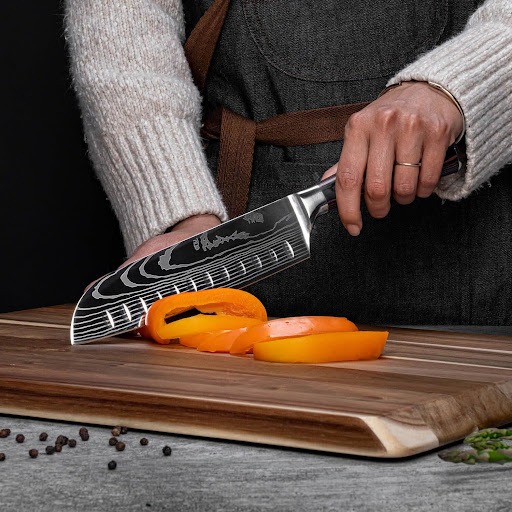
A dull knife is a cook’s worst enemy. It doesn’t just make slicing and dicing a frustrating chore; it’s also a safety hazard. A dull blade requires more pressure to cut, increasing the risk of it slipping and causing an injury. A sharp knife, on the other hand, glides through food with precision, making your time in the kitchen more enjoyable and efficient.
While there are many ways to sharpen your kitchen knives, one method stands above the rest for its effectiveness and the quality of the edge it produces: using a Japanese whetstone. For centuries, these water stones have been the tool of choice for master chefs and blade enthusiasts who demand the sharpest possible edge.
This guide will walk you through everything you need to know to transform your dull kitchen knife set into a collection of precision culinary tools. You’ll learn what makes Japanese whetstones special, what materials you need, and the exact steps to achieve a razor-sharp edge.
Understanding Japanese Whetstones
So, what exactly is a Japanese whetstone? Unlike Western oil stones, Japanese whetstones, or toishi, are designed to be used with water. The water acts as a lubricant, carrying away the metal particles (called a “slurry”) that are removed from the blade during sharpening. This slurry actually helps in the sharpening process, acting as a fine abrasive to polish the blade’s edge.
One of the key features of whetstones is their grit level, which indicates how coarse or fine the stone’s abrasive surface is. Grit is measured in numbers:
- Low Grit (Under 1000):These are coarse stones used for repairing chipped or very dull knives. They remove a lot of material quickly to reshape the edge.
- Medium Grit (1000 to 3000):This is the workhorse of sharpening. A 1000-grit stone is perfect for regular sharpening of a moderately dull knife. Many home cooks find this is all they need for routine maintenance.
- High Grit (3000 and above):These are finishing or polishing stones. They are used to refine and polish the edge after it has been sharpened on a medium-grit stone. A high-grit stone creates a razor-sharp, mirror-like finish, perfect for tasks requiring delicate, clean cuts.
Many chefs and enthusiasts prefer Japanese knives and whetstones because they offer unparalleled control over the sharpening process, allowing for an incredibly sharp and durable edge that other methods can’t match.
Materials You’ll Need
Before you begin, gather a few essential items. Having everything ready will make the process smoother and more effective.
- Japanese Whetstone:A combination stone with two different grits (like a 1000/6000 grit combo) is an excellent starting point for most home cooks.
- A Bowl of Water:Large enough to fully submerge your whetstone.
- A Non-Slip Surface:A damp towel or a rubber mat placed under the stone will prevent it from sliding around while you work. Some whetstones come with a dedicated holder for this purpose.
- Your Kitchen Knife:The one you want to bring back to life.
- A Small Cleaning Brush or Old Toothbrush:For cleaning the whetstone after use.
Step-by-Step Sharpening Guide
With your materials ready, it’s time to start sharpening. Take your time, focus on your technique, and you’ll be rewarded with a perfectly sharp blade.
Step 1: Soak the Whetstone
Place your whetstone in the bowl of water and let it soak. You’ll see air bubbles rising from the stone. Once the bubbles stop, which usually takes about 5-10 minutes, the stone is saturated and ready to use. Do not over-soak your stone, as this can weaken it over time. During sharpening, keep the surface of the stone wet by splashing a little water on it as needed.
Step 2: Find the Right Angle
The angle at which you hold the knife to the stone is the most crucial part of sharpening. For most Japanese knives, the ideal angle is between 15 and 20 degrees. A simple way to visualize this is to place two coins on the stone and rest the spine of the knife on them. This will give you a close approximation of a 15-degree angle. Consistency is more important than the exact degree, so find a comfortable angle and stick with it.
Step 3: Sharpen the First Side
Start with the coarser side of your stone (e.g., 1000 grit). Place the heel of the knife (the part of the blade closest to the handle) on the stone at your chosen angle. With one hand on the handle and the fingers of your other hand applying gentle, even pressure on the flat of the blade, push the knife away from you, as if you are trying to slice a thin layer off the stone.
Maintain the angle as you move the blade across the entire length of the stone, from heel to tip. On the return stroke, simply glide the knife back without applying pressure. Repeat this motion 10-15 times. You should start to see a fine metal burr forming on the opposite side of the edge. You can feel for this burr by carefully running your finger away from the edge on the side of the blade that wasn’t touching the stone.
Step 4: Sharpen the Second Side
Once you’ve raised a burr along the entire length of the first side, flip the knife over and repeat the process on the other side. Use the same angle and the same number of strokes. The goal is to create a consistent burr on this side as well.
Step 5: Refine the Edge (Optional)
If you have a combination stone, flip it over to the finer grit (e.g., 6000 grit). Repeat steps 3 and 4 on this finer surface. This will polish the edge, remove the burr, and create a razor-sharp finish. You will only need a few strokes on each side for this step.
Step 6: Remove the Burr
To complete the process, you need to remove the microscopic burr. The best way to do this is by making a few alternating, edge-trailing strokes on the finest grit stone. Pull the knife backward across the stone, from tip to heel, alternating sides with each pass. Do this a few times until the edge feels smooth.
Testing for Sharpness
How do you know if your knife is truly sharp? Here are two simple tests:
- The Paper Test:Hold a piece of paper by its edge and try to slice downwards through it with your knife. A sharp knife will slice cleanly through the paper with little to no resistance. A dull knife will snag or tear the paper.
- The Tomato Test:A ripe tomato has a tough skin but a soft interior, making it a perfect test for sharpness. A sharp knife should be able to slice through the skin effortlessly without squishing the tomato.
Maintaining Your Tools
Proper care will ensure your Sakuto knives and your whetstone last for years.
- Knife Care:After sharpening, wash your knife with warm, soapy water and dry it immediately. Never put high-quality kitchen knives in the dishwasher, as the harsh detergents and high heat can damage the blade and handle.
- Whetstone Care:After each use, rinse your whetstone under running water and use a small brush to remove any metal particles. Allow it to air dry completely before storing it. Over time, your stone may develop a concave surface. You can use a flattening stone to level it out again.
Master Your Most Essential Kitchen Tool
Learning to sharpen your own kitchen knife set with a Japanese whetstone is a rewarding skill that will fundamentally change your cooking experience. It connects you to your tools on a deeper level and empowers you to maintain them at peak performance.
While it may feel a bit awkward at first, patience and practice are all you need. Start with an older, less expensive knife if you’re nervous, and focus on maintaining a consistent angle. Before you know it, you’ll be sharpening with confidence and enjoying the effortless precision of a perfectly honed blade in all your culinary creations.