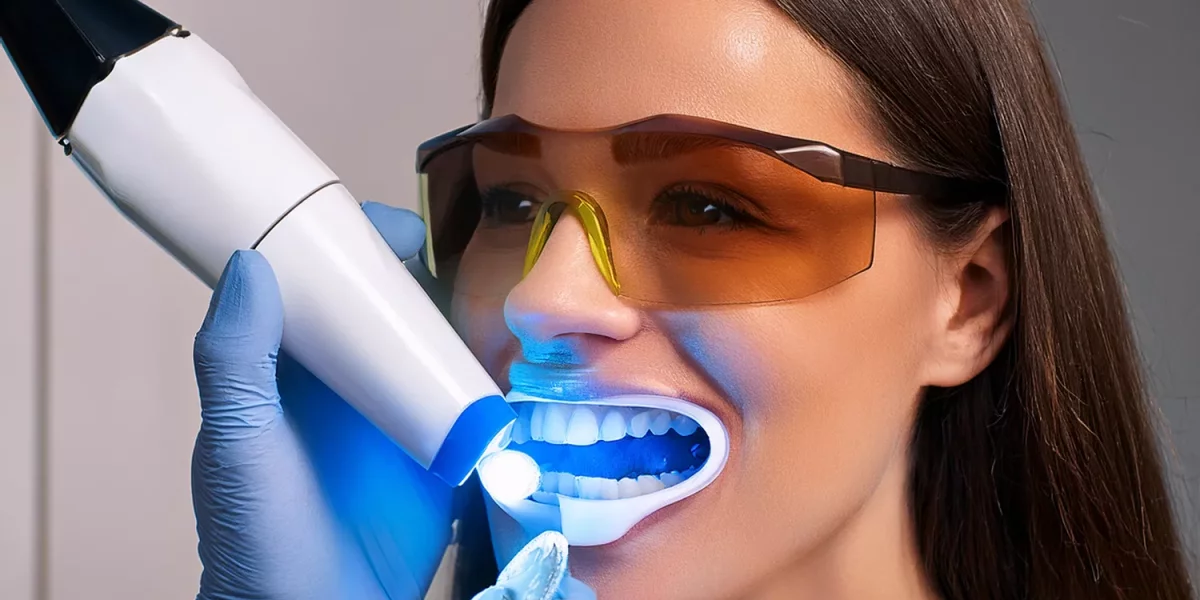
In-office teeth whitening has long been marketed as a quick cosmetic enhancement — a same-day smile upgrade that delivers immediate patient satisfaction. In the United States, systems such as Philips Zoom WhiteSpeed have become synonymous with professional whitening due to their clinical reliability and rapid results.
However, for forward-thinking dental practices, whitening should no longer be viewed as a simple add-on procedure. When structured correctly, it can become a strategic asset that drives patient acquisition, cosmetic case conversion, and measurable financial growth.
Contents
The Strategic Role of Whitening in Modern Dentistry
Teeth whitening occupies a unique position in the treatment hierarchy. It is:non-invasive,
relatively time-efficient,
emotionally impactful,
accessible to a wide patient demographic.Unlike complex restorative procedures, whitening typically requires minimal diagnostic preparation and carries a high acceptance rate. This makes it an ideal entry point into aesthetic dentistry.
But while demand is strong, long-term profitability depends on how efficiently the service is managed.
The Operational Constraints of Traditional Models
Philips Zoom WhiteSpeed utilizes advanced LED activation and controlled treatment cycles to ensure consistent results. Yet the traditional workflow includes disposable light guides with limited-use cycles. Once the predefined number of sessions is reached, replacement becomes mandatory.
From a financial standpoint, this introduces:
recurring variable costs,
dependency on inventory turnover,
reduced predictability in cost-per-case calculations,
cumulative margin pressure over time.
As whitening becomes more successful within a practice, consumable expenses increase proportionally.
This creates a growth paradox: higher patient demand results in higher recurring operational costs.
Shifting from Variable to Predictable Cost Structures
To transform whitening into a scalable revenue engine, practices must reduce internal variability. One emerging strategy involves the use of unlimited-use components compatible with Philips Zoom systems, such as Bleach Infiniter.
By eliminating cycle-based limitations, clinics can stabilize their cost structure. This transition offers several measurable advantages.
Margin Preservation Without Price Increases
Reducing recurring light guide expenses improves gross margin per case without increasing patient fees. In competitive U.S. markets where pricing transparency is high, this margin control is critical.
Financial Forecasting Stability
Predictable internal costs simplify:
annual budgeting,
quarterly performance reporting,
cosmetic service forecasting,
multi-location standardization.
For DSOs and expanding group practices, consistency across operatories and locations becomes a decisive advantage.
Operational Continuity
Unlimited-use solutions reduce workflow interruptions. There is no need to track remaining cycle counts or anticipate replacement timing. This improves:
scheduling reliability,
chair utilization efficiency,
staff workflow stability.
Operational continuity enhances both patient satisfaction and internal productivity.
Whitening as a Catalyst for Cosmetic Expansion
Whitening often serves as the first step in a broader aesthetic journey. Patients who invest in whitening frequently express interest in:
porcelain veneers,
bonding refinements,
orthodontic alignment,
comprehensive smile makeovers.
By improving the financial performance of whitening, practices indirectly strengthen the entire cosmetic treatment pipeline.
Lower internal costs allow clinics to promote whitening more aggressively, increasing the number of patients entering the aesthetic funnel.
Aligning Technology with Business Strategy
Advanced whitening systems such as Philips Zoom WhiteSpeed represent strong clinical platforms. However, technology alone does not guarantee financial optimization.
Sustainable growth requires alignment between:
clinical excellence,
operational efficiency,
cost predictability,
marketing scalability.
Integrating cost-control solutions such as Bleach Infiniter enables practices to align these components. Whitening transitions from a consumable-dependent service to a strategically managed business line.
Long-Term Competitive Positioning
The U.S. cosmetic dentistry landscape continues to evolve. Patients are informed, comparison-driven, and highly responsive to aesthetic value. Practices must maintain premium treatment standards while protecting margins.
Clinics that structure whitening around predictable economics gain several long-term advantages:
stronger EBITDA contribution from cosmetic services,
improved ROI on whitening equipment,
greater flexibility in promotional pricing,
resilience in competitive markets.
Conclusion
Professional teeth whitening should no longer be viewed as a transactional cosmetic service. With proper cost management and operational strategy, it becomes a scalable asset capable of driving broader practice growth.
By combining the clinical reliability of Philips Zoom WhiteSpeed with stabilized cost structures — including unlimited-use solutions such as Bleach Infiniter — dental practices can transform whitening into a high-performance component of their long-term strategy.
In today’s market, sustainable success in cosmetic dentistry depends not only on brighter smiles — but on smarter business architecture.
Read More From Baddiehubx