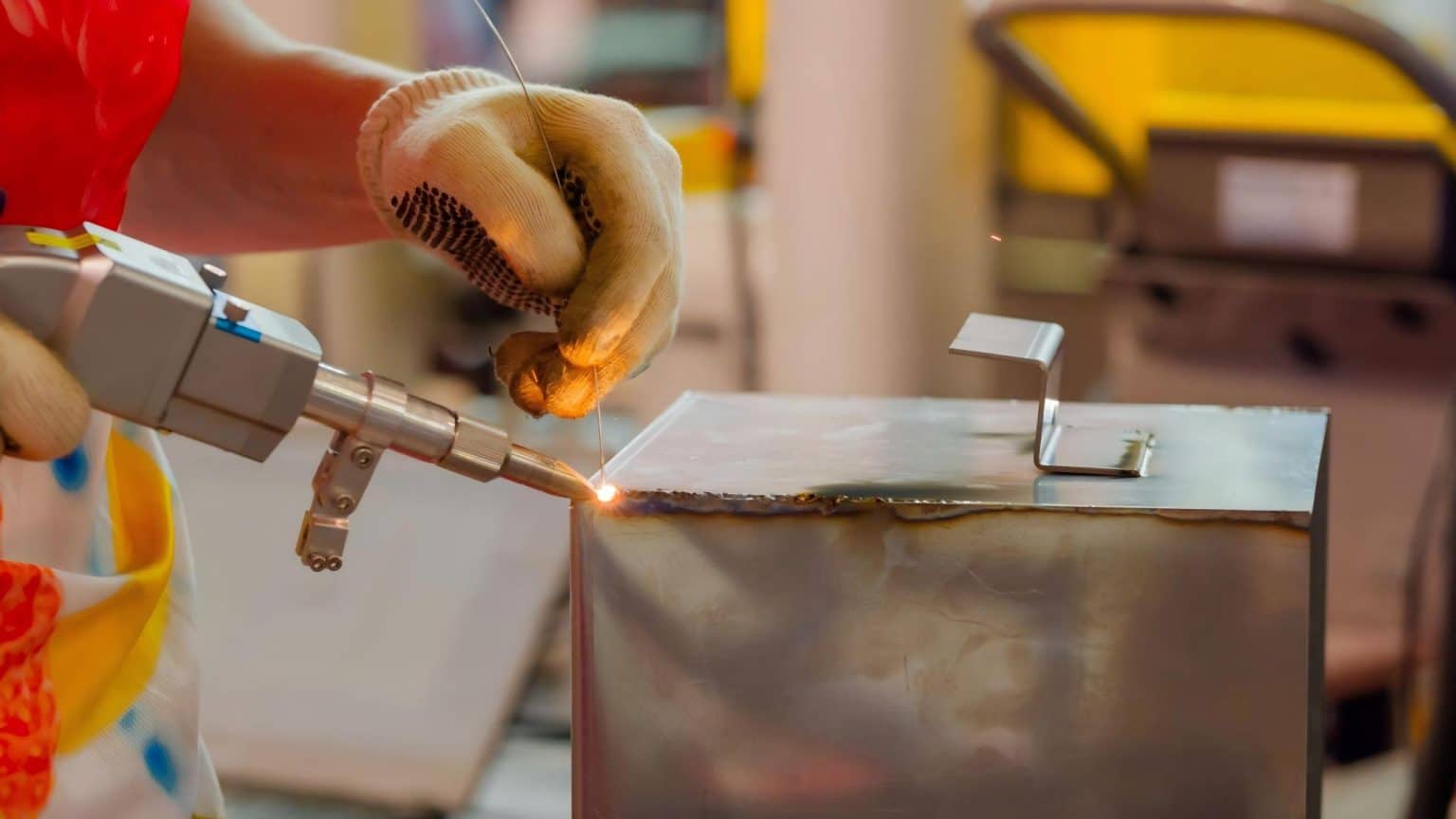
In mass production, consistency is everything. Even small variations in welding can create costly rework, reduced throughput, and product defects. This is where fixtures for welding come in. These engineered tools hold, align, and support workpieces during welding to eliminate variability and ensure each weld meets the same high standard.
From automotive manufacturing to heavy equipment production, welding fixtures are the unsung heroes that transform a skilled but variable process into a repeatable, predictable workflow. By reducing setup errors, minimizing distortion, and saving operator time, fixtures enable manufacturers like you to meet demand without sacrificing quality.
Why Fixtures Matter in High-Volume Welding
Reducing Variation & Ensuring Positional Accuracy
Fixtures for welding hold parts firmly in place, ensuring correct joint gaps, torch angles, and distances. This prevents misalignment and weld defects that otherwise appear when parts move during heat application. Using precision-engineered fixtures is essential for maintaining repeatability and consistency in both manual and automated welding processes.
Enabling Repeatability Across Operators & Shifts
Fixtures enforce the same setup across every shift, regardless of operator skill. This creates a repeatable process that delivers uniform results in high-volume environments.
Minimizing Distortion & Residual Stress
By holding components securely, fixtures minimize the risk of warping or shifting under heat loads. Consistent orientation also helps manage thermal expansion.
Reducing Setup Time & Rework
Pre-calibrated fixtures streamline setup, eliminating repeated adjustments. This reduces downtime and lowers scrap rates while maintaining productivity.
Types of Welding Fixtures & Their Use Cases
- Manual Fixtures: Simple clamps, toggles, or pins. Ideal for prototyping or low-volume jobs.
- Semi-Automatic Fixtures: Pneumatic or hydraulic systems for faster part loading/unloading.
- Fully Automatic Fixtures: Integrated with robotic welding cells for continuous production.
- Modular/Reconfigurable Fixtures: Adjustable setups for multiple part designs, ideal for mixed production runs.
Each type addresses different production needs, helping manufacturers balance flexibility with consistency.
Design Principles & Innovations in Fixture Engineering
Precision Locators & Clamps
High-quality pins, dowels, and clamping systems secure workpieces without damage, maintaining positional accuracy.
Modular & Parametric Fixture Design
Modular elements and parametric CAD tools make it easier to reconfigure fixtures for new product lines without starting from scratch.
Smart & Sensor-Enabled Fixtures
Sensor integration allows real-time monitoring of displacement, temperature, or clamping force. This ensures accurate positioning and flags issues during production.
Materials & Thermal Stability
Fixtures are designed with durable materials that resist thermal expansion and distortion during welding, maintaining long-term reliability. This ensures consistent performance even under repeated use in demanding applications. For example, in roofing projects where metal sheets require precise alignment, reliable fixtures prevent warping and gaps. By holding components steady, they not only improve weld quality but also reduce costly rework and downtime.
Integration with Automation & Robotic Welding
In smart factories, fixtures play a critical role in enabling robotic welding. They:
- Align seamlessly with robotic path planning.
- Provide part rotation and indexing for multi-angle welding.
- Ensure torch access and clearance for complex welds.
This integration reduces collision risks and maximizes robotic uptime.
ROI, Efficiency & Cost Considerations
While custom fixtures involve upfront costs, the payback is significant:
- Reduced scrap & rejects: Fewer defective welds save materials and labor.
- Faster throughput: Less setup time increases output per shift.
- Lower labor costs: Fixtures reduce reliance on highly skilled operators.
For many manufacturers, the ROI is realized quickly as consistency boosts yield and reduces rework.
How Denaliweld Fixtures for Welding Support Mass Production
Denaliweld offers a full portfolio of fixtures for welding tailored to mass production. From manual to fully automated systems, these fixtures are engineered with:
- Precision clamping systems that ensure repeatable, accurate welds.
- Modular adaptability for multiple product families.
- Seamless integration with welding systems to maximize throughput.
By combining precision engineering with ease of use, their fixtures empower manufacturers to scale production without compromising quality.
Conclusion
Welding fixtures are essential for high-volume production, ensuring every weld is consistent, accurate, and cost-efficient. By reducing variation, minimizing distortion, and streamlining setup, they transform welding into a predictable, repeatable process.
For manufacturers aiming to boost consistency and throughput, the right fixture strategy is non-negotiable. With innovative solutions like those offered, you can align precision with productivity—and secure a stronger competitive edge in mass production.